
Best Per-Key RGB Gaming Laptops in the UK (2026)
Per-key RGB is gaming's signature aesthetic: every key individually lit, customisable, reactive. In 2026 it remains the mark of a proper gaming laptop — and the machines that have it are usually excellent in other ways too.
These are the best per-key RGB gaming laptops for UK buyers.

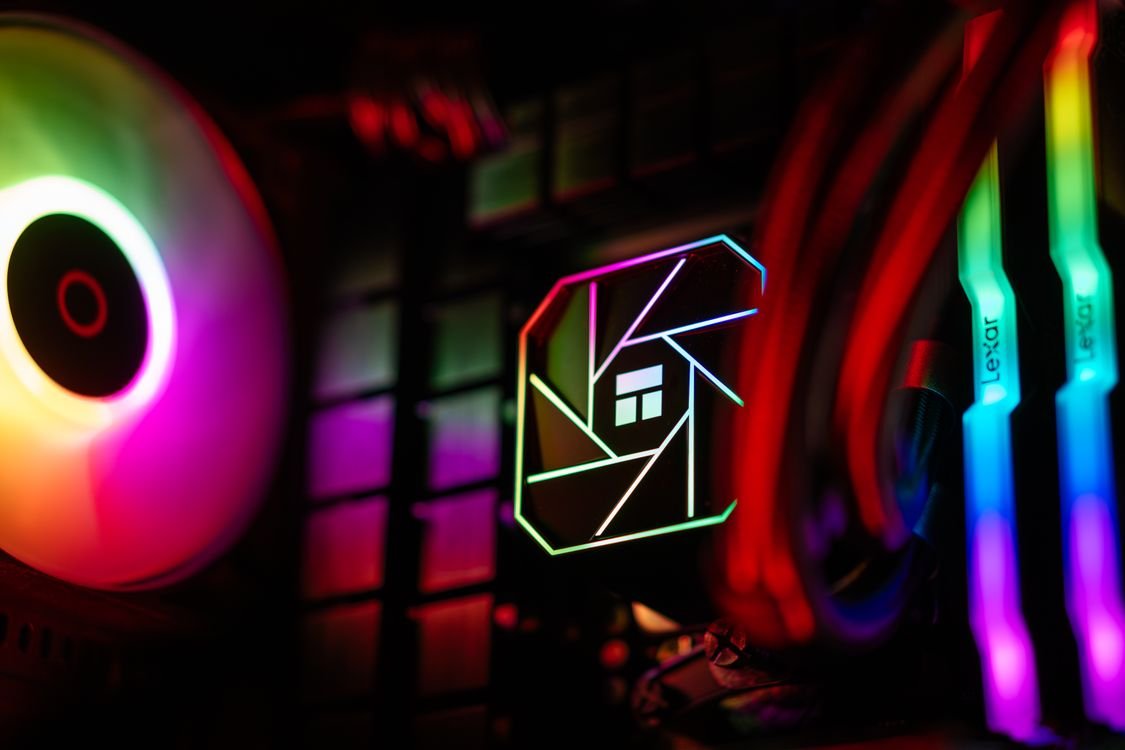
Illustrative stock photo (Pexels / Unsplash)
Per-key RGB: what it is and why it matters
Per-key RGB versus zone lighting: per-key means each of the 80+ keys has its own LED — full customisation, reactive effects, per-game profiles. Zone lighting (typical on budget machines) divides the keyboard into 3–4 zones — pretty, but crude. The difference is visible and, to enthusiasts, meaningful.
The practical note: per-key RGB is a premium-tier feature. Manufacturers reserve it for mid-range and above — so its presence signals a better machine overall. It is also fully customisable: turn it off, set it to subtle white, or go full rainbow. Your keyboard, your choice.
ASUS ROG Strix: the RGB customisation king
ASUS ROG Strix G16 and Scar 18 offer the most customisable RGB in the business via Armoury Crate and Aura Sync — per-key control, reactive effects, synchronisation with other ASUS gear. Typical UK prices: £1,500–£4,500.
ASUS's RGB ecosystem is the deepest: the software is powerful (if occasionally clunky), the effects are extensive, and Aura Sync ties the whole setup together. For RGB enthusiasts, ROG is the default.
Razer Blade: Chroma refinement
Razer Chroma is the most polished RGB ecosystem: per-key control on the Blade 16/18, studio-quality effects, and integration with games and apps. Typical UK prices: £2,400+.
Chroma's advantage is refinement — the effects look better, the software is more stable, and the game integrations are deeper. You pay the Razer premium, but the RGB experience is genuinely superior.
MSI Raider and Lenovo Legion: RGB options
MSI's Raider series (Mystic Light) and Lenovo's Legion Pro 7 both offer per-key RGB — MSI leaning into the gaming aesthetic, Lenovo more restrained. Typical UK prices: £1,300–£3,400.
MSI's RGB is bold and gamer-forward; Lenovo's is tasteful and office-compatible. Both are fully customisable. Choose based on the machine you want — the RGB is a bonus, not the reason.
RGB software compared
RGB software compared: Armoury Crate/Aura Sync (ASUS — the deepest — per-key control, extensive effects, device sync across the ASUS ecosystem; powerful but occasionally clunky); Razer Synapse/Chroma (the most polished — studio-quality effects, the best game integrations, rock-stable; the premium experience); MSI Mystic Light (the gamer-forward — bold effects, straightforward; less refined than Chroma, more fun than most); Legion Zone (the restrained — per-key on Pro models, tasteful effects; the office-compatible RGB).
The software ranking: Chroma for polish and integrations (the best); Aura Sync for depth and customisation (the most powerful); Mystic Light for straightforward fun (the easiest); Legion Zone for subtlety (the most professional). All four allow complete disablement — the RGB is optional everywhere. The software matters less than the hardware (per-key versus zone — the physical capability), but the best software elevates good hardware. For the RGB enthusiast, ASUS + Chroma peripherals is the maximum expression.
The office mode: RGB off, professional on
The office mode: every RGB system offers the professional escape — static white (the universal office setting — clean, inoffensive, readable); complete off (the stealth mode — the laptop is indistinguishable from a business machine); dimmed single-colour (the subtle accent — dark blue, low brightness — personality without provocation); and profile switching (one click — office by day, rainbow by night).
The professional RGB strategy: create the office profile on day one (white/off — the default for work); bind it to a hotkey or the manufacturer's quick-switch (Fn combos, the ROG button — instant transformation); and the interview/meeting rule (when in doubt, off — no one was ever judged for a dark keyboard). The RGB laptop is not unprofessional — the unmanaged RGB laptop is. Ten minutes of profile setup buys complete social flexibility. The gaming laptop that does boardrooms is the best of both worlds.
RGB and battery: the power cost
RGB's battery cost: per-key RGB at full brightness consumes 2–5W — meaningful on battery (5–10% of the light-use power budget), negligible plugged in. The practical impact: RGB on (full rainbow, maximum brightness — the battery drains visibly faster; the 8-hour ultrabook becomes 7 hours); RGB dimmed (low brightness, single colour — the cost drops to ~1W, barely measurable); RGB off (zero cost — the maximum endurance).
The battery strategy: the manufacturer's software usually offers battery-aware RGB (dim or disable on battery — enable it); the manual approach (office profile with RGB off — the travel setting); and the plugged-in freedom (at the desk, the RGB costs nothing — rainbow away). The RGB battery cost is real but manageable — the awareness, not the abstinence, is the solution. For the traveller, RGB off is free battery; for the desk gamer, RGB on is free joy.
The ecosystem endgame: the RGB hobby
The RGB enthusiast's endgame is the ecosystem: the laptop (the per-key — the base — the owned); the peripherals (the Chroma — the synced — the added); and the room (the light strips — the ambient — the complete). The synced battlestation — the keyboard, the mouse, the headset, the room — the one ecosystem, the one app. The RGB is the hobby — the ecosystem is the expression.
The ecosystem method: the brand (the chosen — the committed — the one); the gradual (the piece — the added — the built); and the restraint (the tasteful — the kept — the admired). The full Chroma or the full Aura — the synced, the unified, the glorious. The enthusiast builds over the years — the laptop is the first piece, not the last.
The sceptic's compromise: the single colour
The RGB sceptic's compromise is the single colour: the white (the clean — the professional — the always); the dimmed (the subtle — the accent — the tasteful); and the off (the available — the one key — the instant). The per-key RGB set to static white is the premium backlight — the £0 upgrade. The sceptic gets the readability; the enthusiast keeps the potential.
The compromise method: the profile (the white — the created — the default); the hotkey (the toggle — the set — the instant); and the peace (the both — the satisfied). The RGB hardware with the restrained software is the best of both — the capability without the circus. The compromise is the wisdom — the white is the timeless.
Living with RGB
RGB buying advice: do not choose a laptop for its lighting — choose the machine, then enjoy the RGB. All major RGB can be turned off or set to subtle modes for work environments.
Software tips: set a subtle static profile for daily use (full rainbow gets old), create a dimmed profile for night use, and sync with your other gear if the ecosystem supports it. Check the live price — RGB models are the mainstream SKUs, so deals are frequent.
Frequently Asked Questions
Which gaming laptops have per-key RGB?
Is per-key RGB worth paying for?
Can you customise per-key RGB effects?
Can I turn the RGB off for work?
Sources & further reading
Related Reading
Best RTX 5080 Laptops in the UK (2026)
The six best RTX 5080 gaming laptops in the UK for 2026 compared — from the £2,577 MSI Vector 16 HX AI to prem…
Read →
Best Gaming Laptops for the Office in the UK (2026)
The best gaming laptops for the office in the UK for 2026 — stealth, professional machines like the Legion Pro…
Read →
ASUS ROG Strix G16 (2026) RTX 5080 Review: The Sweet-Spot 16-Inch Gaming Laptop
ASUS ROG Strix G16 review UK (2026): RTX 5080 16GB, Ryzen 9 8940HX, 16-inch 165Hz G-Sync display. Listed at £2…
Read →